
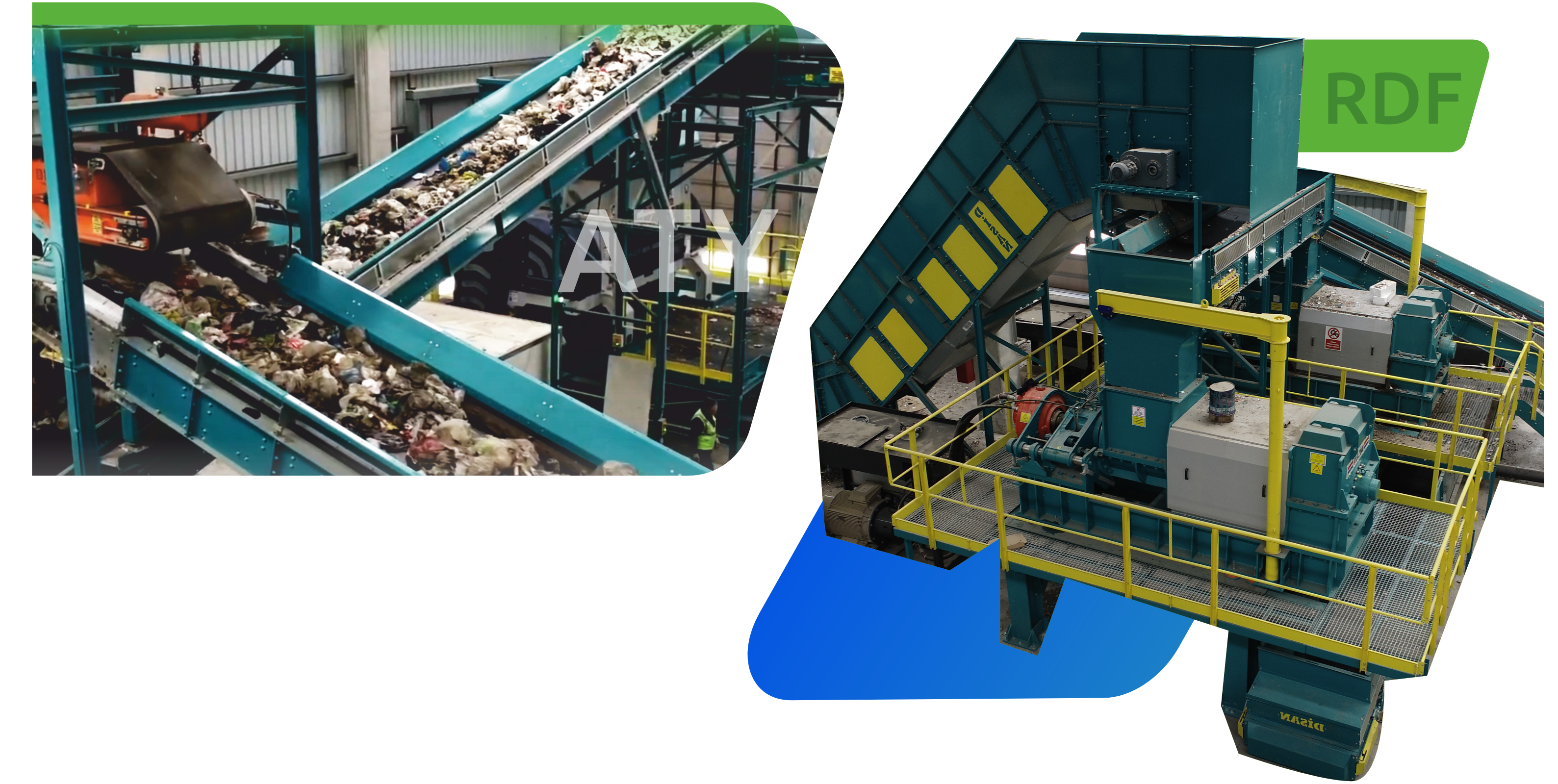
Refused Derived Fuel
Refuse Derived Fuel (RDF) is a type of fuel obtained by processing municipal solid waste (MSW) in mechanical separation facilities. Non-recyclable waste with high calorific value is first shredded to a size of below 70 mm and then pressed to reduce the moisture content to a range of 25-30%. This environmentally friendly fuel is particularly preferred in sectors that traditionally use fossil fuels for energy production. Its most common application is as an alternative fuel in incineration facilities, such as cement plants, both in Turkey and globally.
The use of RDF offers significant advantages in terms of sustainable energy production and efficient waste management. By utilizing non-recyclable but high-calorific-value waste, the net energy produced can reach up to 3,500-4,500 kcal/kg. RDF not only helps reduce environmental impacts but also contributes to improving energy efficiency. Moreover, it plays a vital role in reducing carbon emissions, as its use results in a lower carbon footprint compared to fossil fuels. RDF also prevents waste from harming the environment and reduces the amount of waste directed to landfill sites, extending their lifespan. Additionally, energy production from waste, as an alternative to fossil fuels, has a positive impact on combating climate change.