
AREAS OF ACTİVİTY
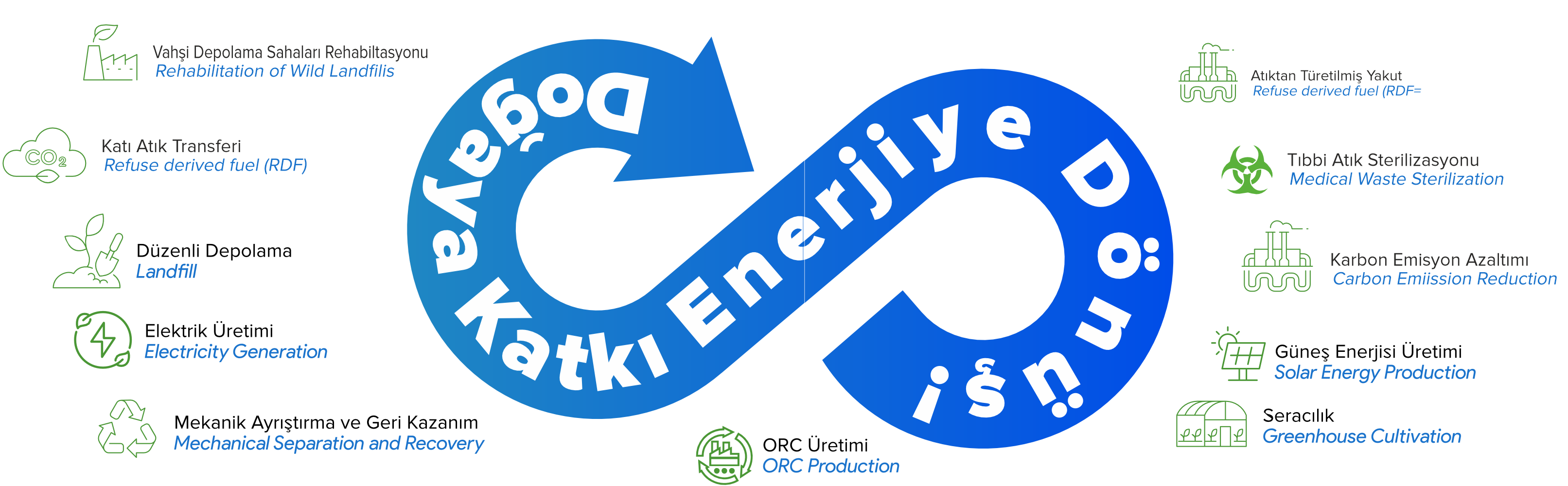
Rehabilitation of Wild Landfills: Landfill of wild rehabilitation involves transferring waste to regulated disposal areas, reducing environmental impacts and improving the ecosystem. This process prevents soil, water, and air pollution.
Solid Waste Transfer: Solid waste transfer is the process of transporting waste from collection points to processing or disposal facilities. This process ensures safe and efficient management of waste, reduces environmental impacts, and supports the recycling process.
Landfill: Waste is stored in areas with impermeable ground, where anaerobic decomposition produces methane gas. This gas is then prepared for use in energy production.
Electricity Generation: We aim to integrate environmentally friendly technologies into our electricity generation processes, focusing on the conservation of natural resources and enhancing energy efficiency.
Mechanical Sorting: Recyclable packaging waste in household waste is sorted into different categories at our modern facilities, maximizing the recycling potential.
Refuse Derived Fuel (RDF): : We produce alternative fuels instead of coal, supplying fuel to cement factories and incineration plants, and turning non-recyclable but high-calorific waste into a valuable resource for the economy.
Waste Heat to Energy (ORC): Waste heat from industrial processes or other sources is converted into electricity using Organic Rankine Cycle (ORC) technology. This method increases energy efficiency, providing both economic benefits and reducing environmental impacts.
Carbon Emission Reduction: At IKS Energy, we are building a clean and sustainable energy future by reducing carbon emissions. Join us on this journey; every step we take is a step towards a cleaner world.
Solar Power Plants: We generate energy from the sun's natural light through solar power plants, reducing dependence on fossil fuels and minimizing environmental impact by lowering carbon emissions.
Greenhouse Farming: Waste heat helps maintain temperature and humidity balance in greenhouses, supporting the efficient growth of plants. This method reduces energy costs while minimizing environmental impacts, offering a key solution for sustainable agriculture.