
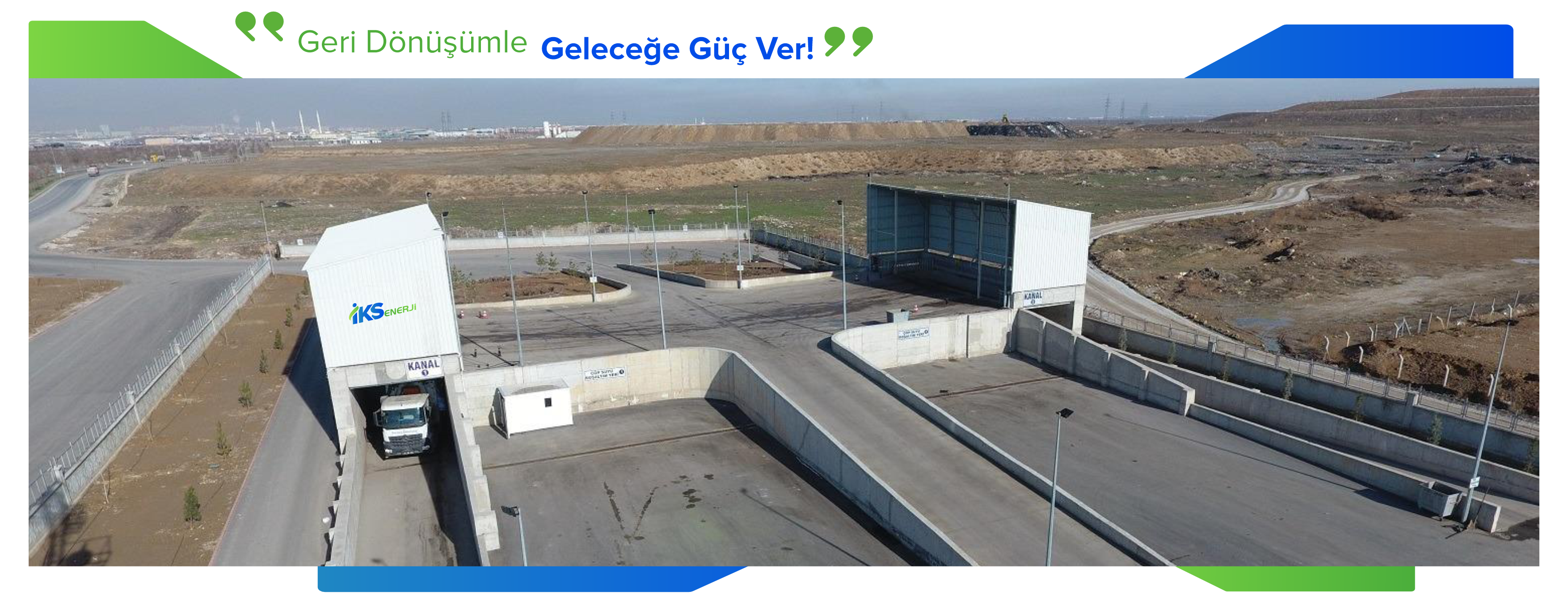
Landfill
As IKS Energy, the municipal waste that arrives at our facility is processed by directing it to the relevant units according to the waste types. In this process, municipal waste is directed to mechanical sorting and material recovery facilities, garden and park waste to compost facilities, waste suitable for biofuel production after mechanical sorting to the landfill sites, and waste suitable for energy recovery is directed to the WTE (Waste to Energy) facilities.
Industrial waste that can be accepted into the landfill sites in accordance with the regulations, and waste that is unsuitable for material and energy recovery after mechanical sorting, are directed to the landfill sites for disposal. Effective leachate and odor management is carried out on-site to minimize environmental negative impacts.
In this context, the most important factors in landfill sites are the area design, rainwater control, and leachate management. To reduce the environmental impacts of landfill facilities, a barrier layer is built at the bottom of the landfill to collect leachate seeping from the landfill environment, preventing contamination of underground and surface waters.
In these sealed areas, the leachate is collected through a drainage layer, accumulated in lagoons/settling ponds, and sent to wastewater treatment facilities. To prevent potential risks that leachate could create for soil and groundwater, it is crucial to establish an efficient leachate collection and drainage system in addition to the natural impermeability layer in landfill facilities.
IKS Energy fully complies with national environmental regulations in its landfill activities. During environmental impact assessments of landfill sites, factors such as landfill site design, soil impermeability, drainage systems, and leachate collection are carefully evaluated and managed.